
Skip to content

Search

Find insights, training programs, and workshops

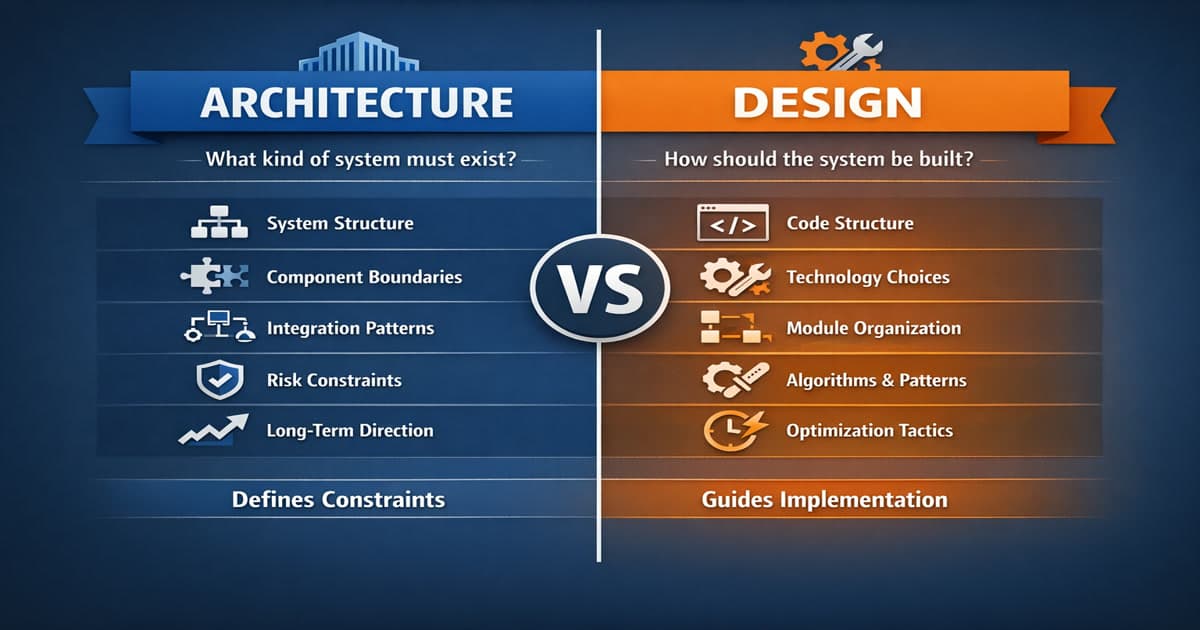
Architecture vs Design: Why Most Organizations Confuse Them

A clear explanation of the difference between architecture and design, why organizations confuse them, and how this confusion creates structural instability in technology systems.

Executive Summary Who this is for: CIOs, CTOs, Enterprise Architects, Solution Architects, Engineering Leaders Problem it solves: Persistent confusion between architecture and design in software...

Context-Driven Architecture: Why Software Design Must Adapt to Business Geography

Just as buildings must adapt to snow, desert, or tropical climates, software architecture must align with business geography to improve predictability and reduce complexity.

Executive Summary Who this is for: CIOs, CTOs, Enterprise Architects, Engineering Leaders Problem it solves: Architectural decisions copied from trends without considering...

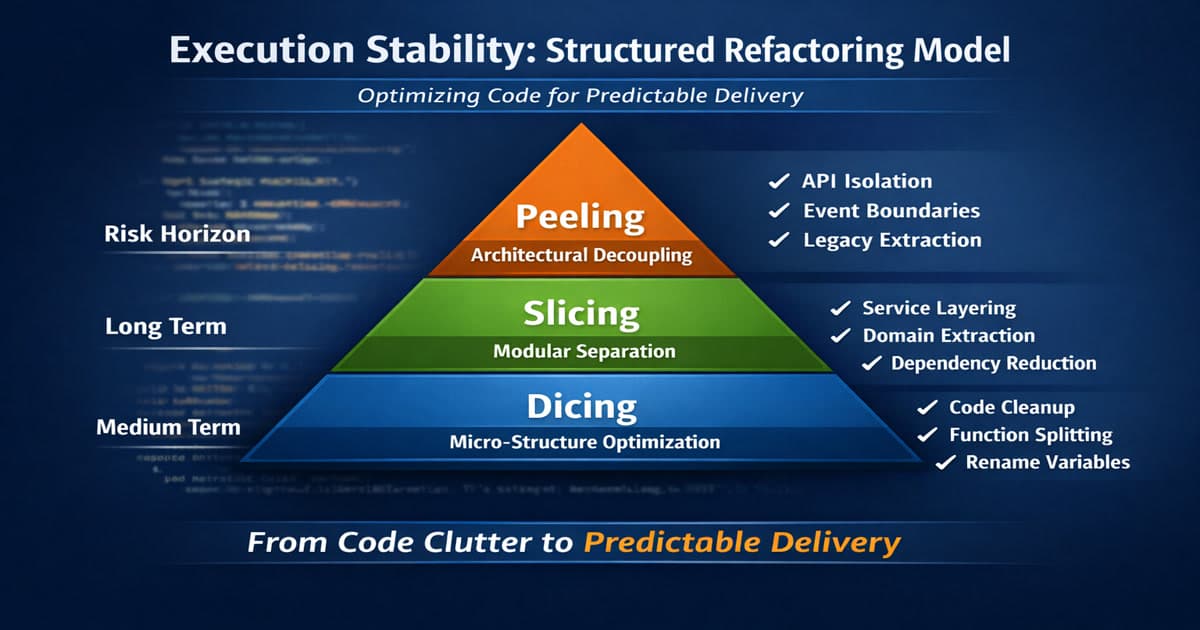
Execution Stability: How Structured Refactoring Improves Delivery Predictability

A practical framework for reducing delivery slowdown caused by unmanaged structural code complexity — improving cycle time, reducing regression risk, and clarifying ownership boundaries.

Executive Summary Who this is for: CTOs, Engineering Directors, Principal Engineers Problem it solves: Growing delivery slowdown caused by unmanaged...

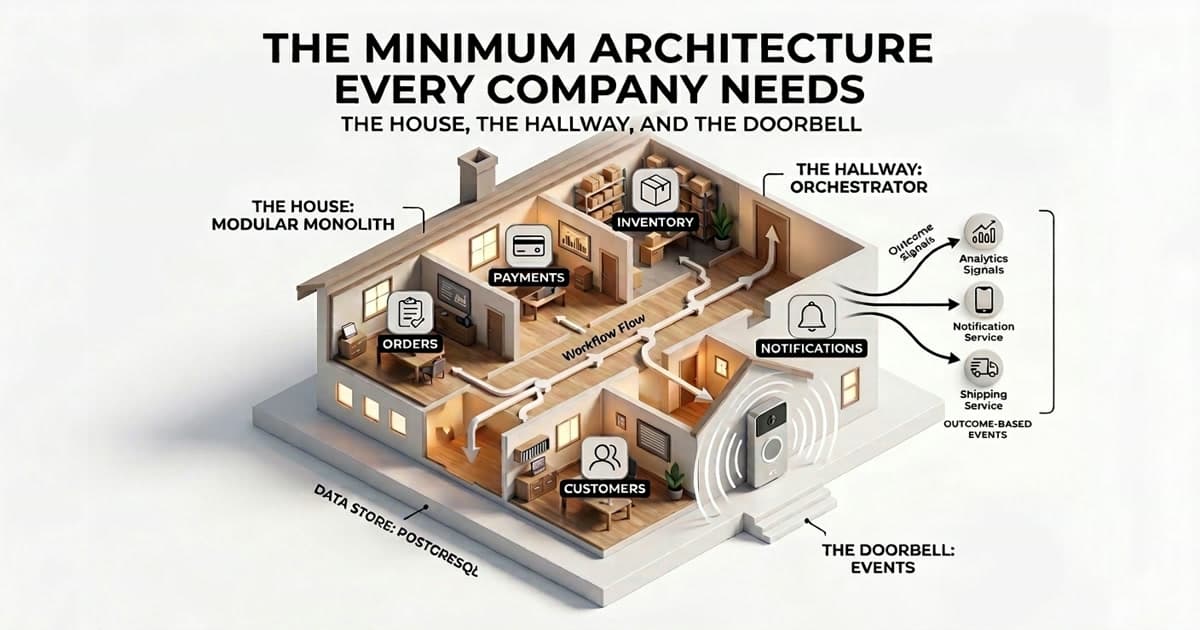
The Minimum Architecture Every Company Needs: The House, the Hallway, and the Doorbell

A practical architectural model explaining why most companies only need a modular monolith, a workflow orchestrator, and outcome-based events.

Executive Summary Who this is for: CTOs, Enterprise Architects, Engineering Leaders designing new systems Problem it solves: Organizations adopting complex architectures...

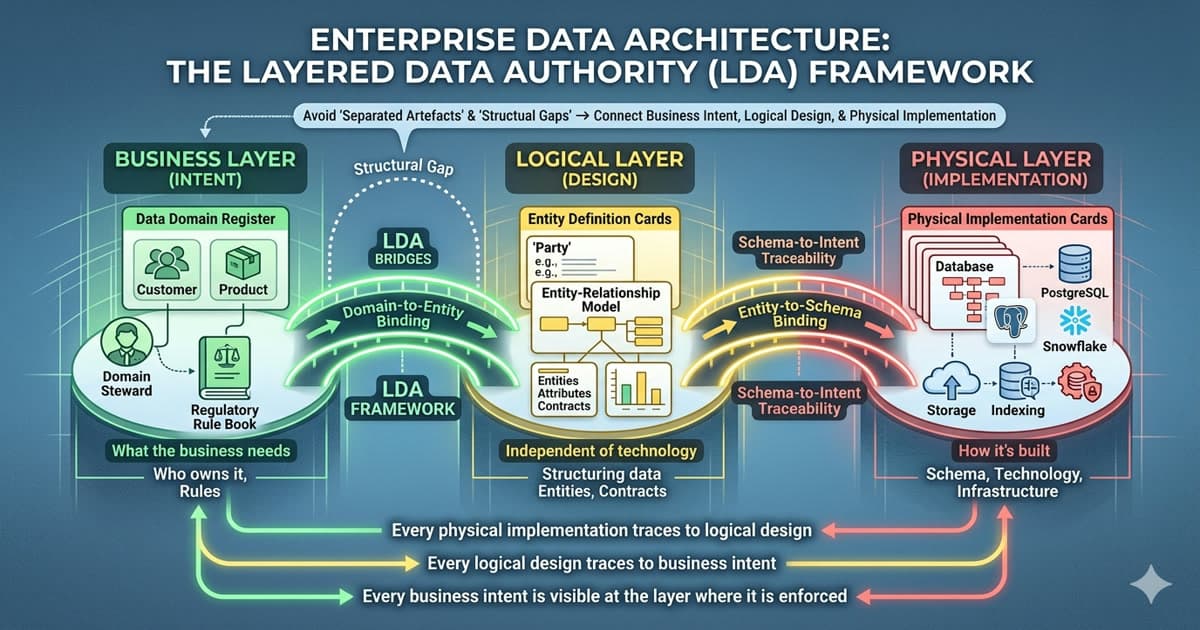
Complete Enterprise Data Architecture Framework: Business, Logical, Physical Layers with Real Templates

Most enterprises build data architectures one layer at a time. Business, logical, and physical layers exist as separate artefacts owned by separate teams. That separation is the structural gap that makes data estates ungovernable.

...entities relate to which, how the schemas connect, and where the domain boundaries are drawn. The platform engineer walks into the same room. She wants to know which database, which partitioning strategy,...

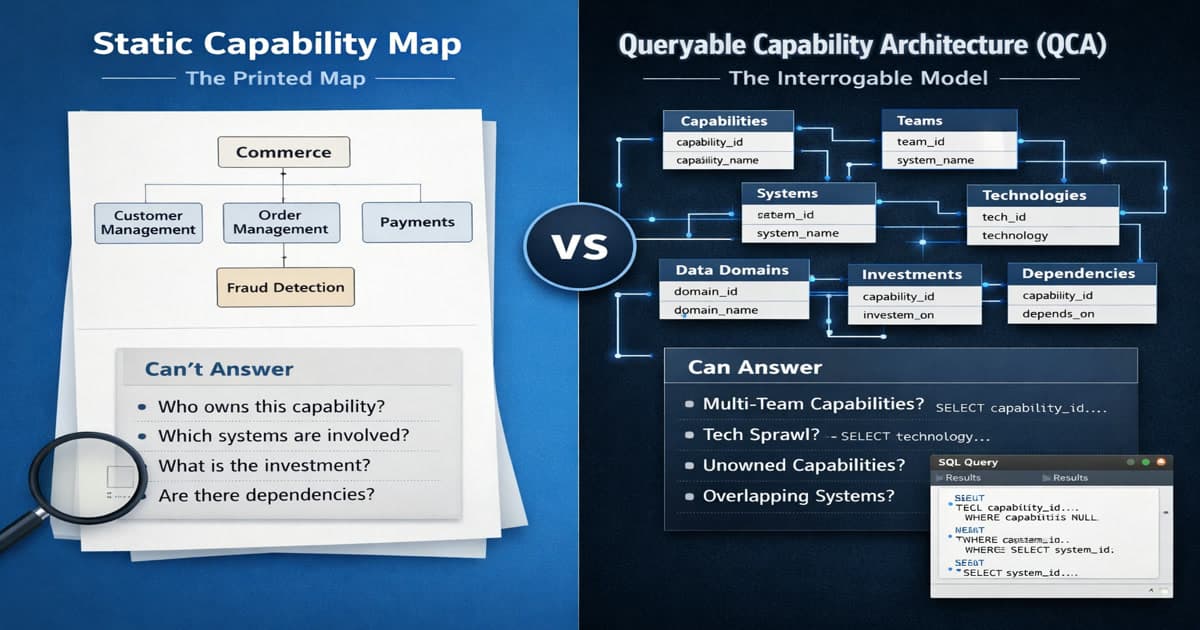
The Capability Map That Cannot Answer a Question Is Not a Capability Map

Why traditional capability maps fail to support governance decisions and how Queryable Capability Architecture turns static maps into interrogable decision systems.

...capabilities receive the largest technology investment? Which capabilities depend on fragile legacy platforms? If the map cannot answer these questions, it is not functioning as a governance tool. It...

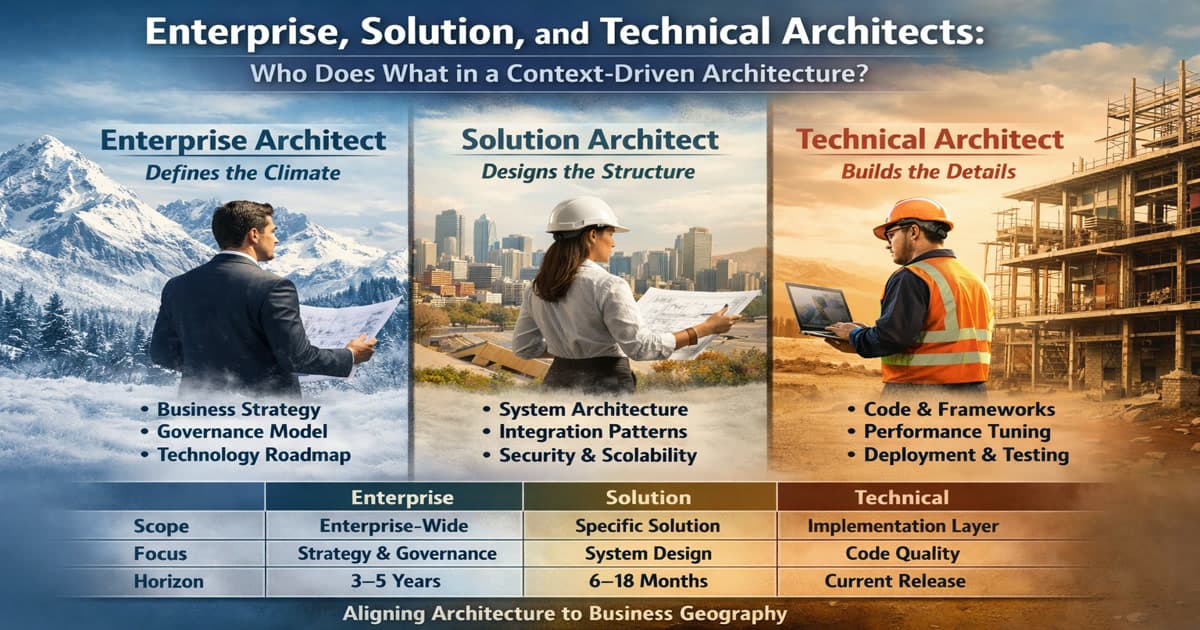
Enterprise, Solution, and Technical Architects: Who Does What in a Context-Driven Architecture?

A structured executive guide explaining the difference between Enterprise, Solution, and Technical Architects using Context-Driven Architecture to clarify responsibilities and reduce structural misalignment.

...environmental level. They define: Target operating model Capability map Technology principles Platform strategy Governance structure Buy vs build posture Cloud and AI positioning They answer: “Given...

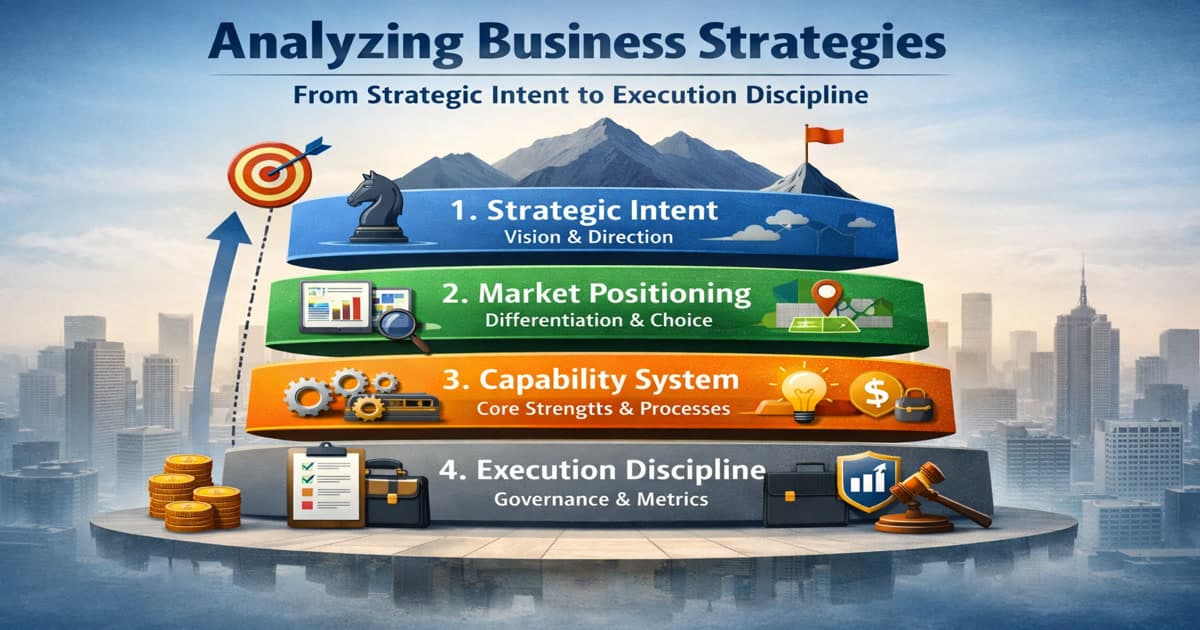
Analyzing Business Strategies: From Strategic Intent to Execution Discipline

A structured executive guide to analyzing business strategies using a four-layer framework that connects intent, positioning, capability, and execution discipline.

...makes trade-offs. Examples: Premium differentiation vs cost leadership Focused niche vs mass market Platform ecosystem vs product excellence If a company claims: High quality Lowest price Fastest delivery Most...

Decision Rights & Delegation
Engineering Managers, Tech Leads, Directors, CTO, VP Engineering3-4 hoursDecision rights map by altitude and domain, with every gap, overlap and delay node named

Decisions made at the wrong altitude are the commonest source of both bottleneck and drift — which makes delegation a design problem, not a trust problem.

...onto Most organisations think they have a leadership problem. They usually have a decision rights problem. Engineering managers get held accountable for outcomes they have no authority to influence. Directors...

1 DayIntensive
AltitudeWho decides what
Paying Down Debt Through Feature Work
CTOs, Engineering Leaders, Enterprise Architects, Product Leaders3-4 hoursA feature-driven debt reduction policy — the rule, the visibility mechanism, and the two questions review asks about every feature

Debt accumulates faster than refactoring projects can remove it. Fund architecture improvement through the product roadmap instead of competing with it.

...in 60 days Putting it all together Cheat sheet Before we start — the one thing to hold onto Every engineering organisation recognises technical debt. Teams say: we should refactor this, this module needs...

1 DayIntensive
ContinuousNot a project