Search

Find insights, training programs, and workshops

Technical Debt & Rationalisation
Intermediate to Advanced (SA, EA, TS)5-6 hoursTechnical debt taxonomy + rationalisation prioritisation framework + modernisation criteria

How to understand, measure, prioritise, and reduce technical debt — the accumulated cost of shortcuts, outdated decisions, and deferred maintenance.

...always debt — invisible, unmanaged debt. Technical debt is the accumulated cost of shortcuts, outdated decisions, and deferred maintenance. Rationalisation is the disciplined process of reducing it — through...

1 DayIntensive
StrategicSA · EA · TS
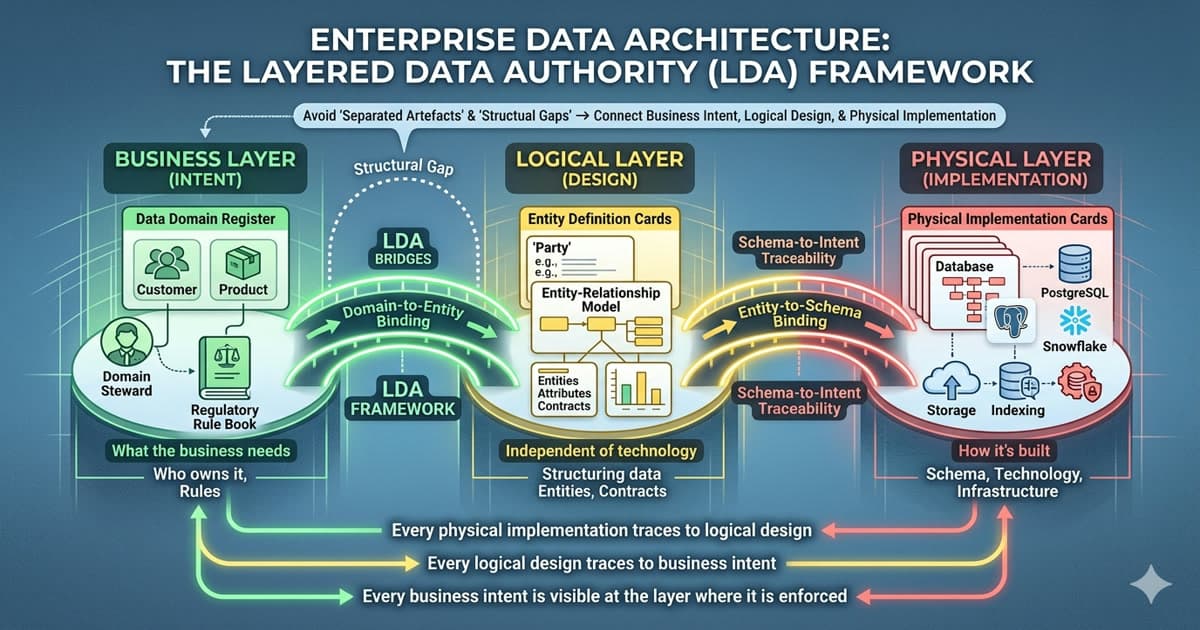
Complete Enterprise Data Architecture Framework: Business, Logical, Physical Layers with Real Templates

Most enterprises build data architectures one layer at a time. Business, logical, and physical layers exist as separate artefacts owned by separate teams. That separation is the structural gap that makes data estates ungovernable.

...templates across all three layers Business impact: Data architectures that stay aligned to business intent, governance that survives implementation change, and a physical estate that can be explained to every...

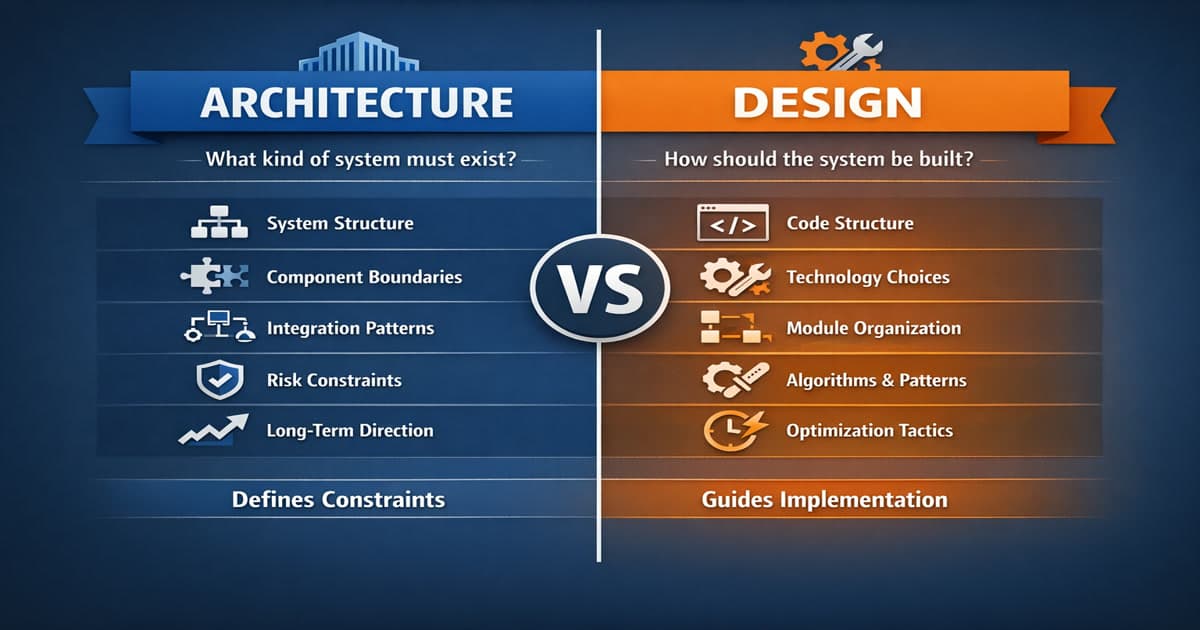
Architecture vs Design: Why Most Organizations Confuse Them

A clear explanation of the difference between architecture and design, why organizations confuse them, and how this confusion creates structural instability in technology systems.

...and design in software and technology organizations Key outcome: Clear structural separation between decision-making architecture and implementation design Time to implement clarity: 30 days Business impact:...

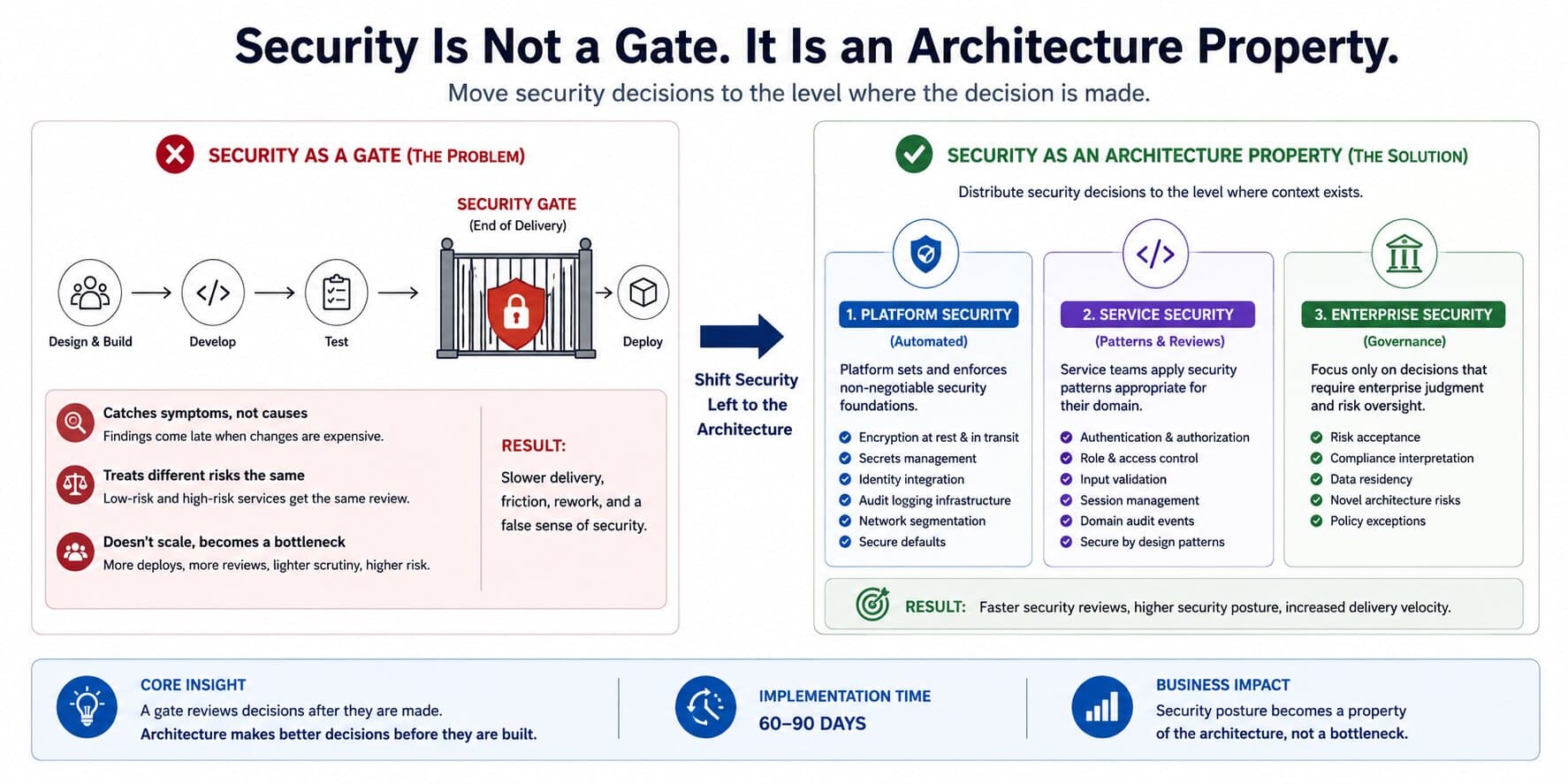
Security Is Not a Gate. It Is an Architecture Property.

Security is treated as a gate at the end of delivery. It should be an architecture property designed into three distinct boundaries. Here is the model that fixes the friction between security and delivery.

...safety — instead of being designed into the architecture as a structural property Key insight: Security decisions belong at the architectural level where the decision is made, not at a central gate that reviews...

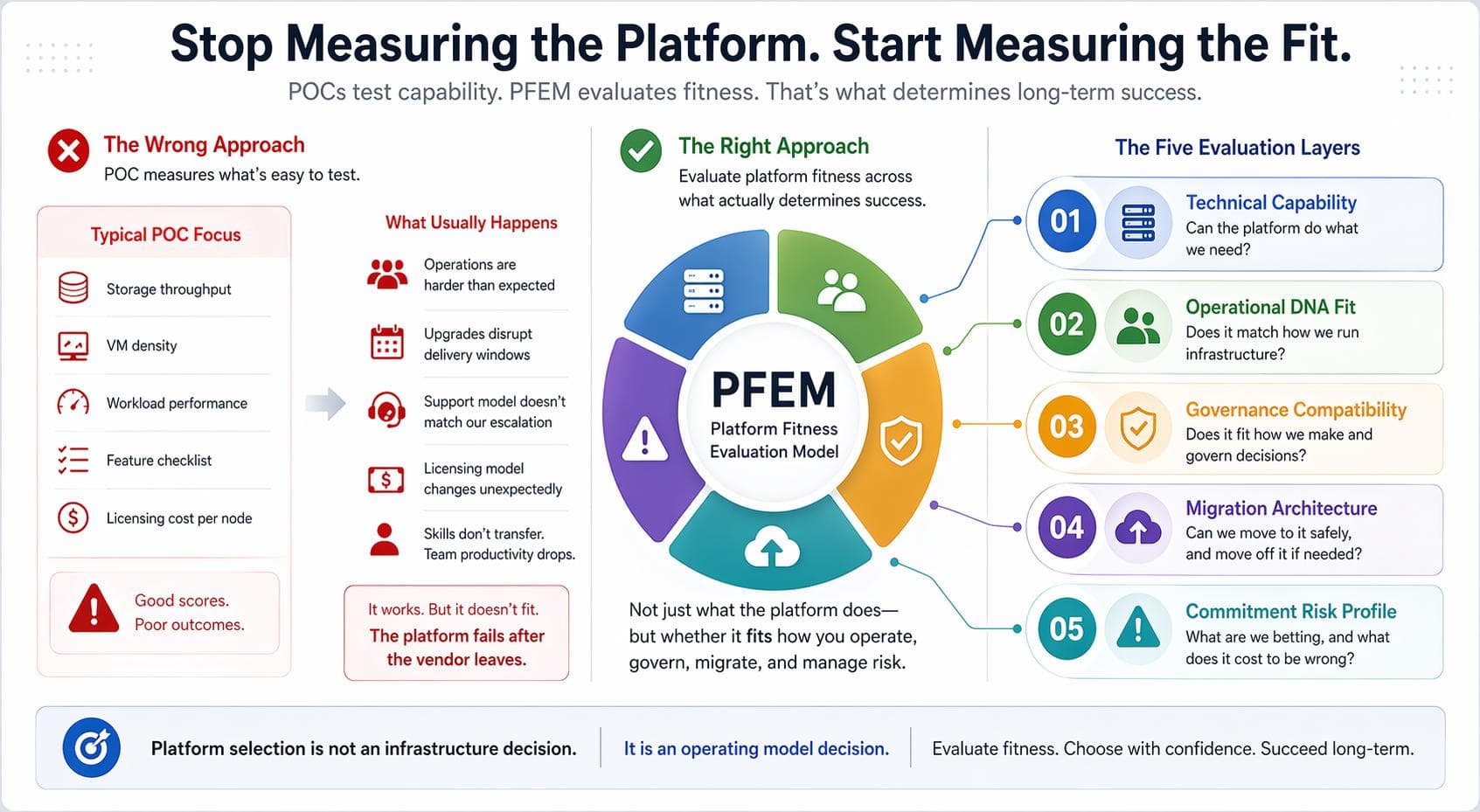
Your HCI Proof of Concept Measures the Wrong Thing.

Most organizations evaluate private cloud and HCI platforms by running a technical POC. The POC passes. The platform fails. The reason is structural — and fixable. The Platform Fitness Evaluation Model (PFEM) tells you what to measure instead.

Executive Summary Who this is for: CTOs, CIOs, Enterprise Architects, Infrastructure Leaders, IT Decision Makers Problem it solves: Organizations select private cloud and HCI platforms using technical...

The Enterprise AI Operating Model: From Experimentation to Institutional Capability

A structured executive guide explaining how to move from AI experimentation to an Enterprise AI Operating Model with governance, autonomy control, and cost discipline.

...AI Transformation Leaders Problem it solves: AI initiatives running as disconnected pilots without governance or structural clarity Key outcome: A practical framework to institutionalize AI across strategy,...

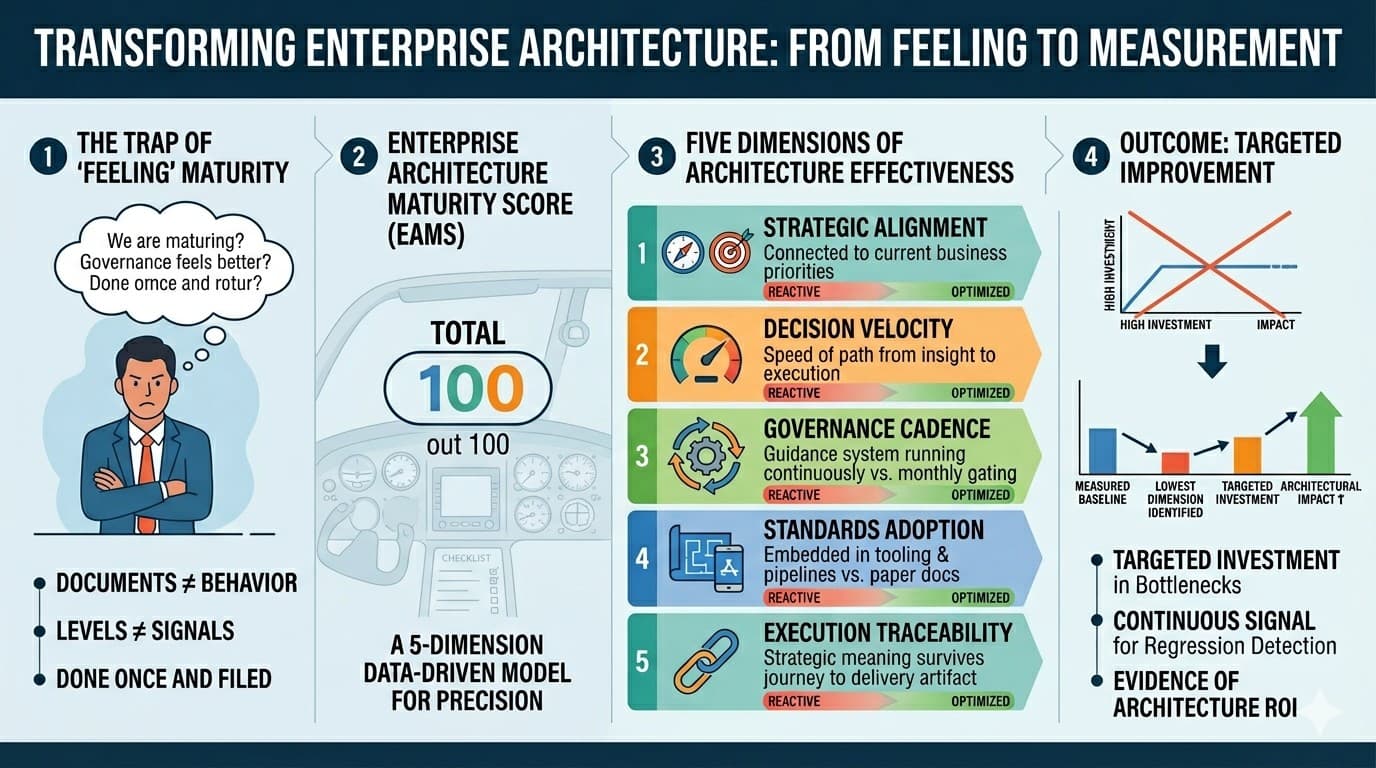
You Cannot Improve an Architecture You Have Not Measured.

Enterprise architecture maturity is not a feeling. It is a score. Organizations that cannot measure their architecture maturity cannot improve it. The EAMS model gives you the score.

...not operate this way when assessing their architecture. They say: Our architecture is maturing. Our governance is improving. We are becoming more agile. These are feelings, not measurements. And you cannot...

Analyzing Business Strategies: From Strategic Intent to Execution Discipline

A structured executive guide to analyzing business strategies using a four-layer framework that connects intent, positioning, capability, and execution discipline.

...evaluated across four structural layers: Strategic Intent Market Positioning Capability System Execution & Governance Discipline If one layer is weak, the strategy eventually collapses. Strategic Intent: The...

Enterprise, Solution, and Technical Architects: Who Does What in a Context-Driven Architecture?

A structured executive guide explaining the difference between Enterprise, Solution, and Technical Architects using Context-Driven Architecture to clarify responsibilities and reduce structural misalignment.

...clarity: 30 days with structured role alignment Business impact: Reduced architectural friction, stronger governance, improved execution predictability Snow, Sand, and Architectural Roles Imagine designing a...

AI Operating Model & Team Design
Intermediate4-5 hoursAI operating model blueprint + team role map + governance forum design

AI success is not just about tools. It depends on how teams are organised, who owns what, how standards are set, and how delivery, governance, and platform capabilities work together.

...failures Why organisation design matters The major operating model patterns Platform, product, and governance roles Decision rights and ownership Capability pathways and centres of gravity How capability...

1 DayStrategy
Operating ModelDesign
1···345···8