Search

Find insights, training programs, and workshops

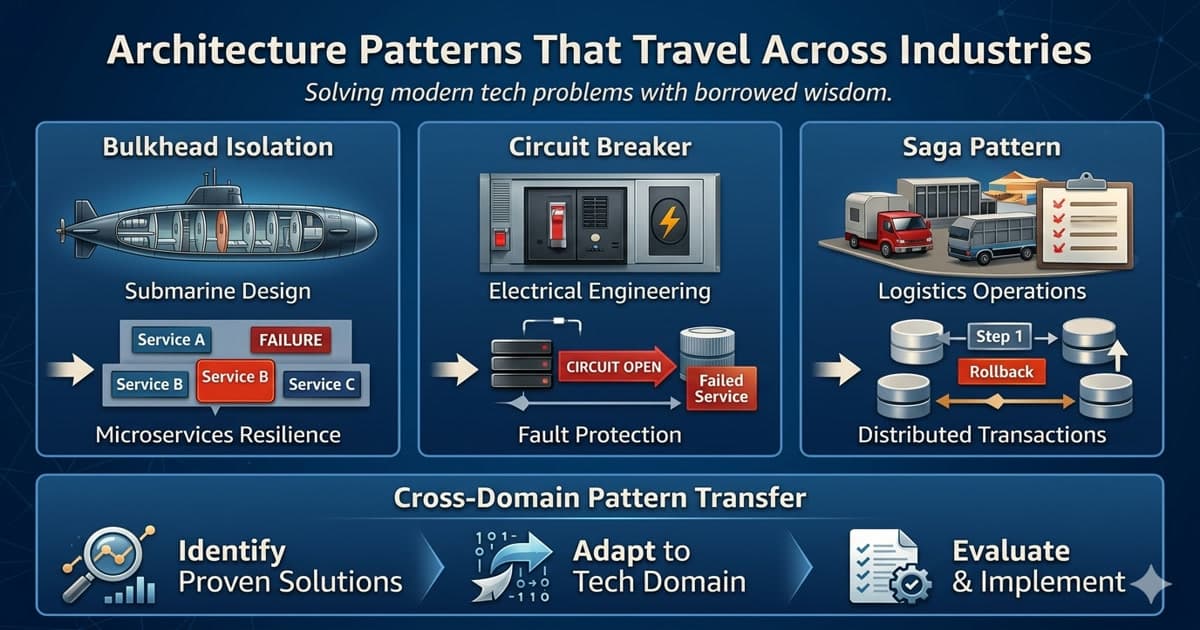
Architecture Patterns That Travel Across Industries

The patterns that solve your hardest distributed systems problems were already solved — in a submarine, a postal sorting office, and an electrical panel. Most architects never look.

...built since. Now consider the software architect, one hundred years later. Designing a microservices platform. One service is taking on too much load. Failures are cascading. One overwhelmed thread pool...

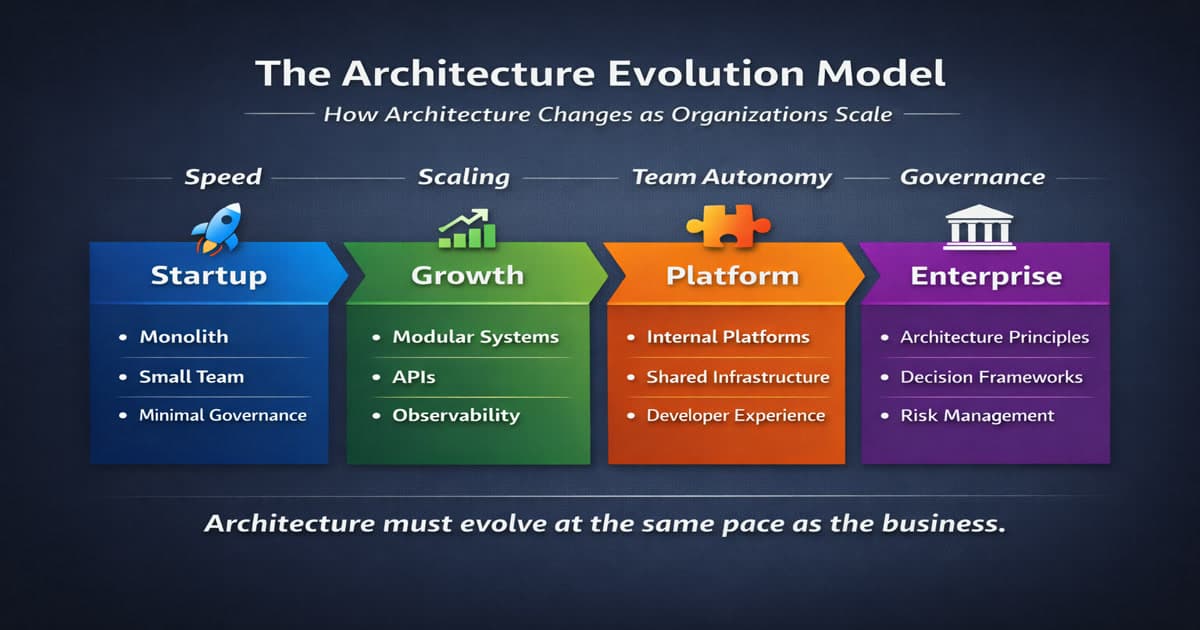
The Architecture Evolution Model: How Architecture Changes from Startup to Enterprise

A practical framework explaining how software architecture evolves from startup experimentation to enterprise-scale governance, and what architectural practices are needed at each stage.

...startup to enterprise Time to implement clarity: 30–60 days Business impact: Reduced architectural overengineering, faster scaling, controlled governance The Hidden Problem in Architecture Conversations Most...

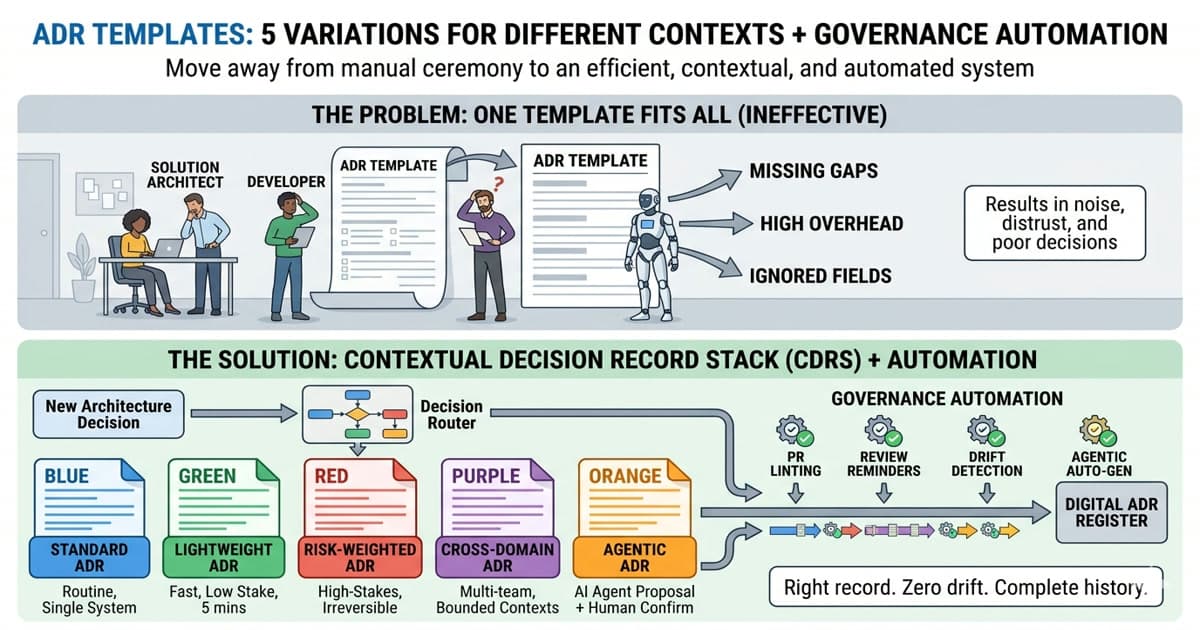
ADR Templates: 5 Variations for Different Contexts + Governance Automation

One ADR template does not fit every architectural context. Five purpose-built variations — for standard decisions, agentic AI, cross-domain impact, fast delivery, and high-risk reversals — plus governance automation to make the system run without manual follow-up.

Executive Summary Who this is for: Enterprise Architects, Solution Architects, Architecture Leads, Engineering Managers Problem it solves: A single ADR template applied to every decision produces incomplete...

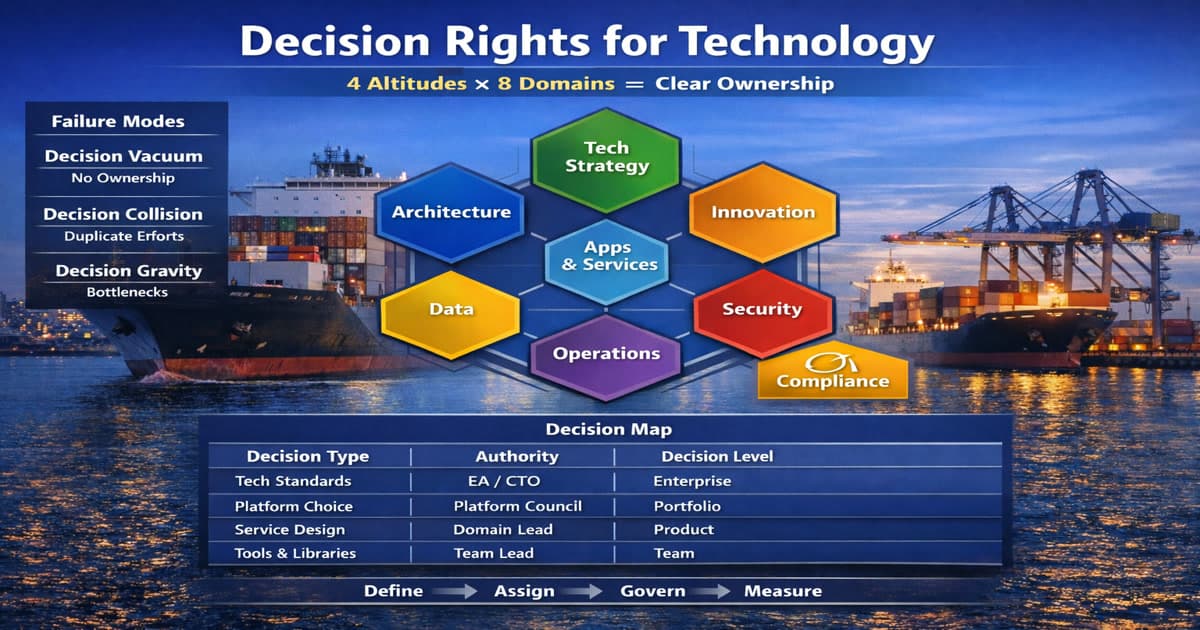
Decision Rights for Technology — Who Decides What in a Modern Enterprise

Why most enterprises confuse escalation ladders with decision rights — and how Technology Decision Domain Architecture maps exactly who decides what, at which altitude, before the conflict arrives.

Executive Summary Who this is for: Enterprise Architects, CTOs, CIOs, Architecture Leads, Engineering Directors Problem it solves: Technology decisions stall, duplicate, or collide because authority...

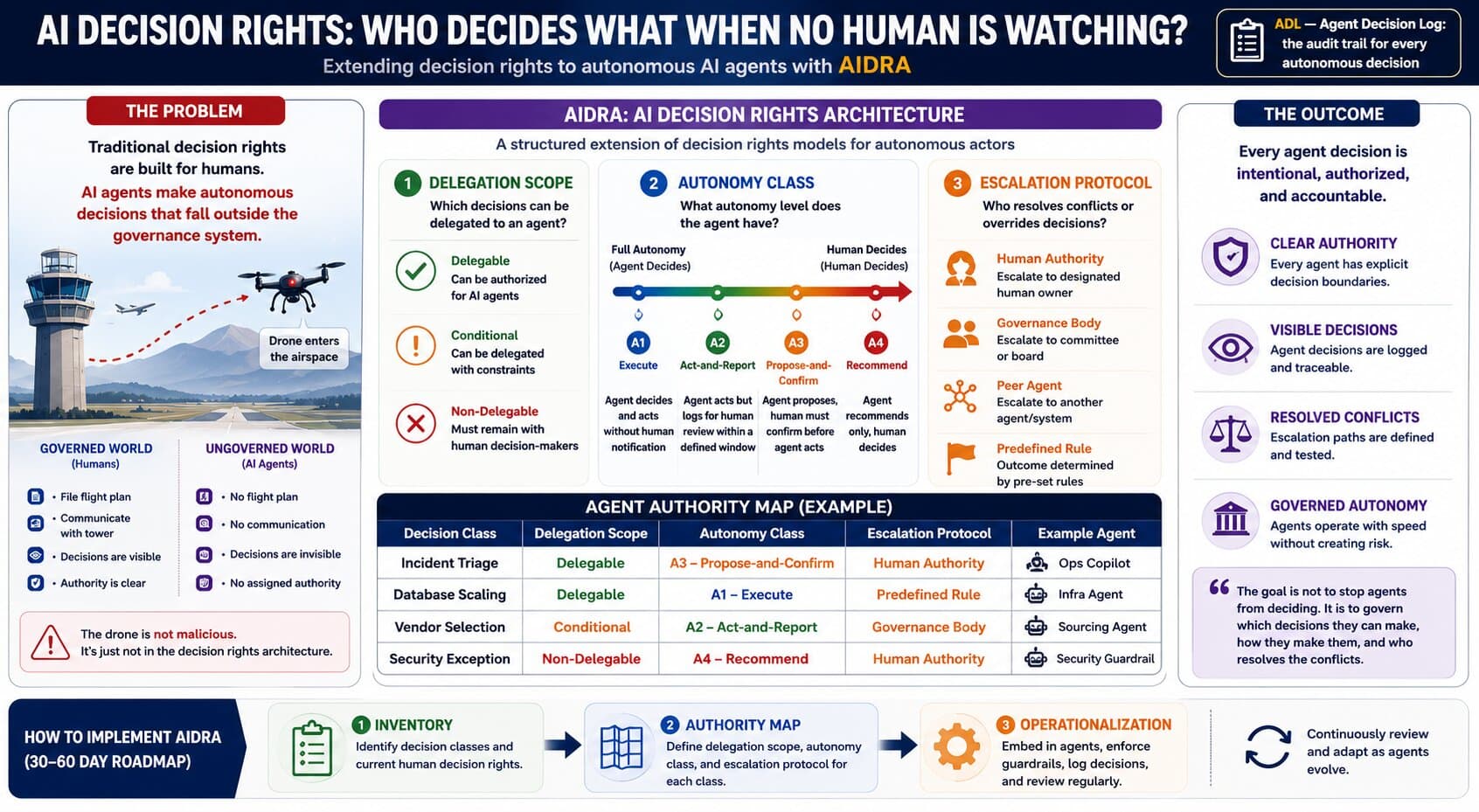
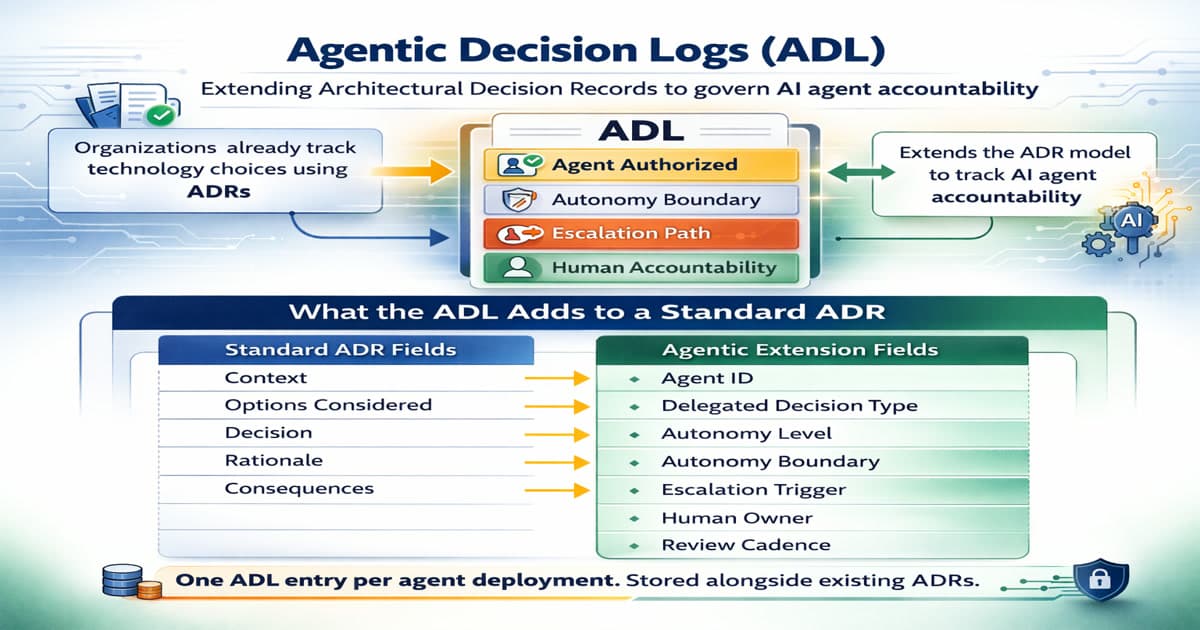
Nobody Uses ADRs as an Agentic Decision Log. They Should.

Why Architectural Decision Records are the only structure most organizations already have that can govern AI agent accountability — and how to extend them into an Agentic Decision Log before the EU AI Act deadline.

...be addressed with a policy document. Something that lives in an AI ethics framework attached to no engineering system. This is the wrong model. Agent governance is an architecture problem. Specifically,...

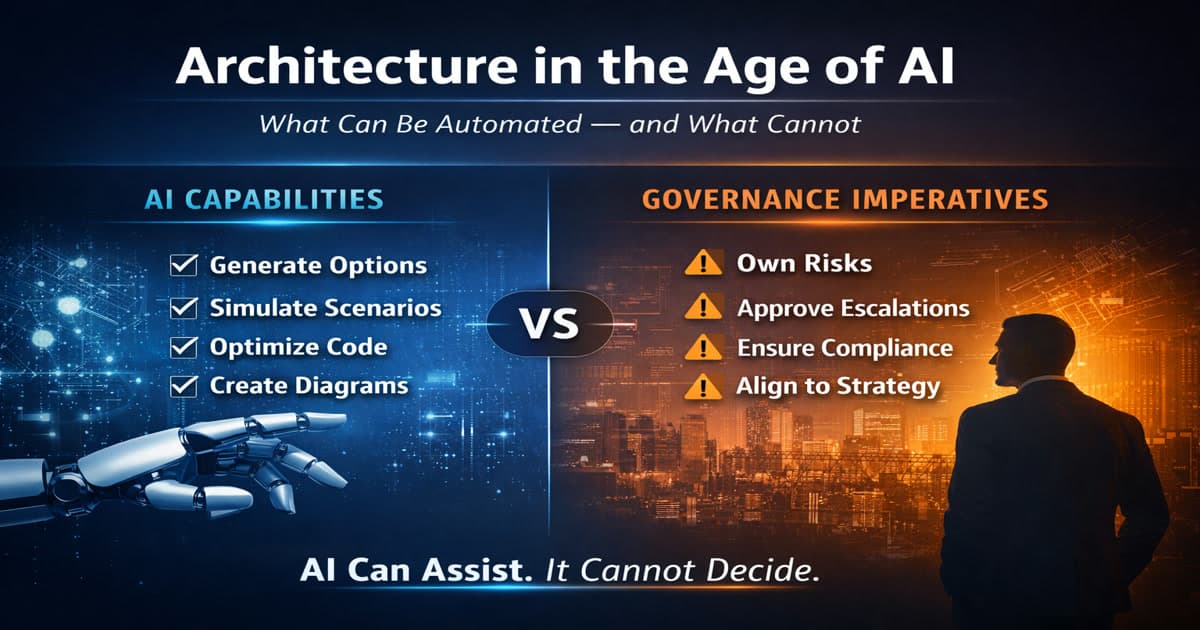
Architecture in the Age of AI: What Can Be Automated — and What Cannot

A governance-driven perspective explaining why software architecture cannot be automated because decision accountability and consequence ownership cannot be delegated to AI.

...estimation AI excels here. This layer is optimizable. Accountability & Governance Layer Who approves platform shifts? Who accepts resilience trade-offs? Who escalates cross-domain conflicts? Who absorbs...

Architecture vs Design: Why Most Organizations Confuse Them

A clear explanation of the difference between architecture and design, why organizations confuse them, and how this confusion creates structural instability in technology systems.

Executive Summary Who this is for: CIOs, CTOs, Enterprise Architects, Solution Architects, Engineering Leaders Problem it solves: Persistent confusion between architecture and design in software...

Context-Driven Architecture: Why Software Design Must Adapt to Business Geography

Just as buildings must adapt to snow, desert, or tropical climates, software architecture must align with business geography to improve predictability and reduce complexity.

Executive Summary Who this is for: CIOs, CTOs, Enterprise Architects, Engineering Leaders Problem it solves: Architectural decisions copied from trends without considering...

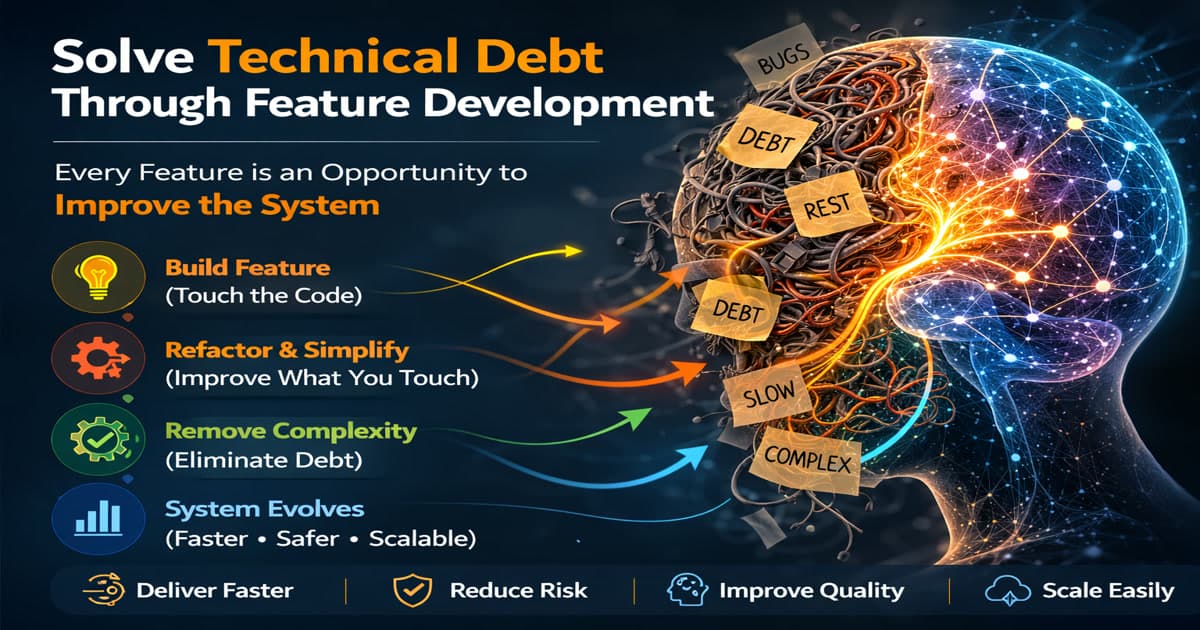
Execution Stability: How Structured Refactoring Improves Delivery Predictability

A practical framework for reducing delivery slowdown caused by unmanaged structural code complexity — improving cycle time, reducing regression risk, and clarifying ownership boundaries.

Executive Summary Who this is for: CTOs, Engineering Directors, Principal Engineers Problem it solves: Growing delivery slowdown caused by unmanaged...

Complete Enterprise Data Architecture Framework: Business, Logical, Physical Layers with Real Templates

Most enterprises build data architectures one layer at a time. Business, logical, and physical layers exist as separate artefacts owned by separate teams. That separation is the structural gap that makes data estates ungovernable.

...which entities relate to which, how the schemas connect, and where the domain boundaries are drawn. The platform engineer walks into the same room. She wants to know which database, which partitioning strategy,...