Skip to content

Search

Find insights, training programs, and workshops

Stakeholder Management & Politics
Intermediate to Advanced (SA, EA, TS)5-6 hoursStakeholder map template + conflict resolution framework + executive alignment guide

How to navigate organisational dynamics, manage conflicting priorities, resolve decision deadlocks, and build executive alignment — because the best architecture recommendation fails without stakeholder alignment.

...an architecture concern Stakeholder mapping Managing conflicting priorities Difficult stakeholders Decision deadlocks Executive alignment Organisational resistance Putting it all together Cheat sheet Before...

1 DayIntensive
StrategicSA · EA · TS
Investment & Prioritisation
Advanced (EA, TS)5-6 hoursInvestment prioritisation model + business case guide (including TCO and unit economics) + sequencing criteria

How to decide which technology initiatives get funded, in what order, and why — connecting architecture to financial decisions and business outcomes.

...can be funded. Budgets are finite, teams are finite, and attention is finite. I've seen investment decisions made on political power, whoever shouts loudest, or whatever was last discussed. And I've seen...

1 DayIntensive
StrategicEA · TS
Technical Debt & Rationalisation
Intermediate to Advanced (SA, EA, TS)5-6 hoursTechnical debt taxonomy + rationalisation prioritisation framework + modernisation criteria

How to understand, measure, prioritise, and reduce technical debt — the accumulated cost of shortcuts, outdated decisions, and deferred maintenance.

...always debt — invisible, unmanaged debt. Technical debt is the accumulated cost of shortcuts, outdated decisions, and deferred maintenance. Rationalisation is the disciplined process of reducing it — through...

1 DayIntensive
StrategicSA · EA · TS
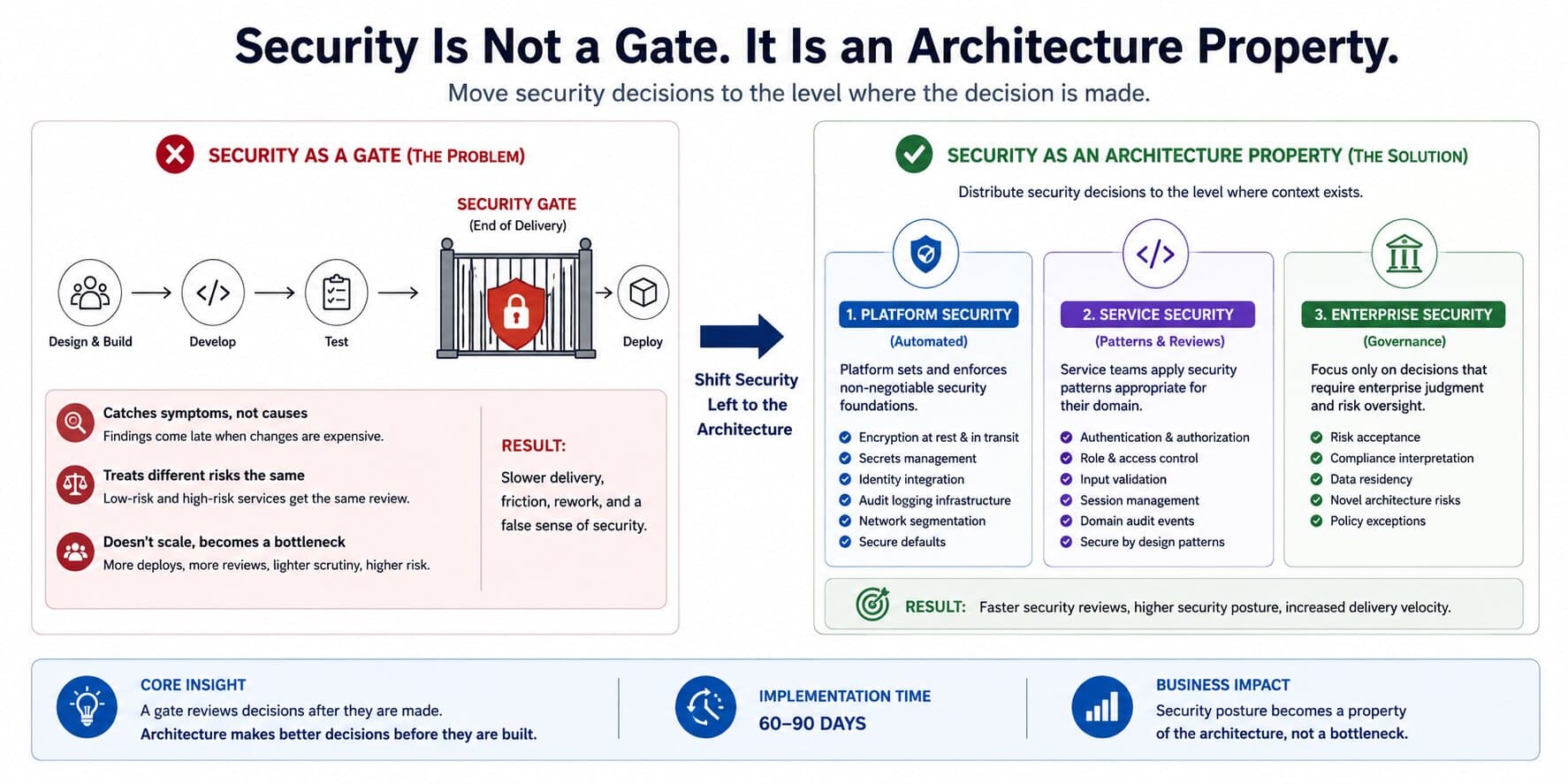
Security Is Not a Gate. It Is an Architecture Property.

Security is treated as a gate at the end of delivery. It should be an architecture property designed into three distinct boundaries. Here is the model that fixes the friction between security and delivery.

...safety — instead of being designed into the architecture as a structural property Key insight: Security decisions belong at the architectural level where the decision is made, not at a central gate that reviews...

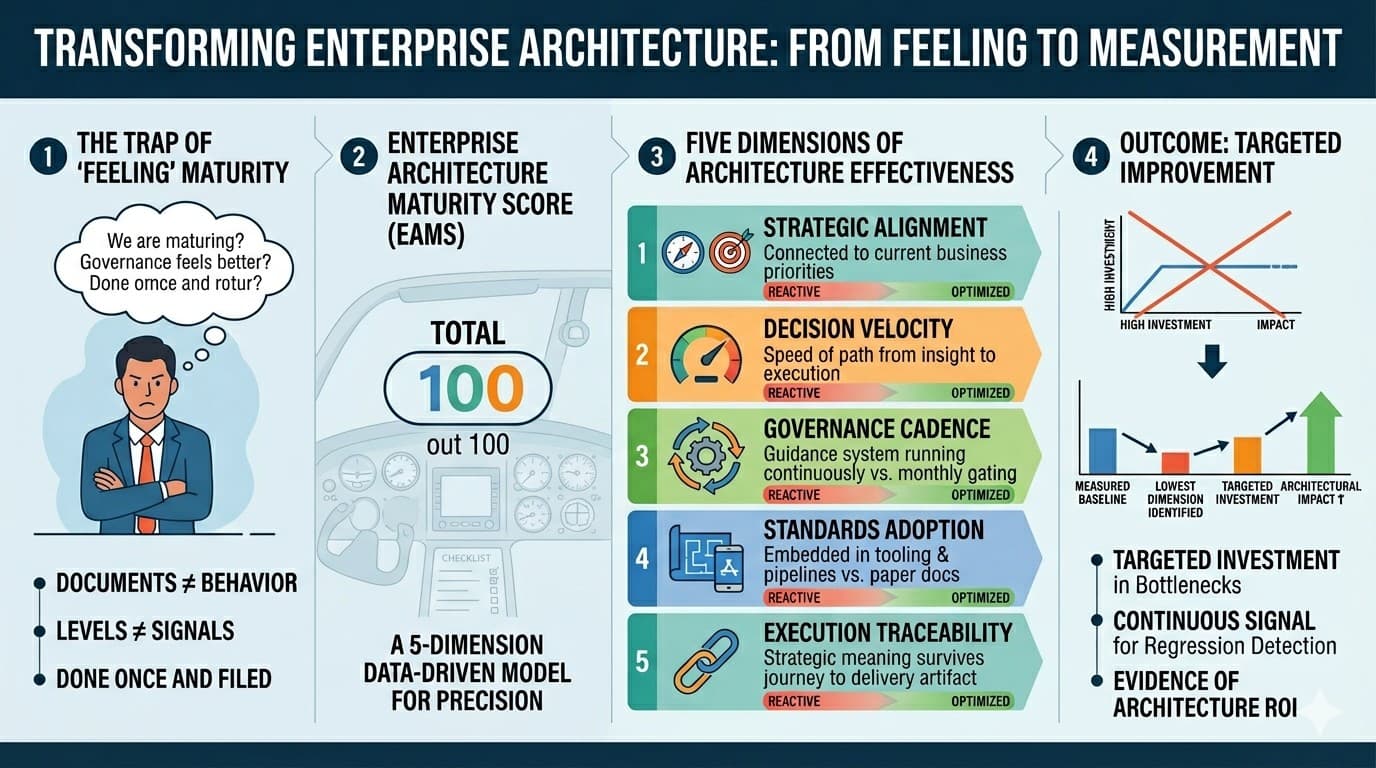
You Cannot Improve an Architecture You Have Not Measured.

Enterprise architecture maturity is not a feeling. It is a score. Organizations that cannot measure their architecture maturity cannot improve it. The EAMS model gives you the score.

...exists. A policy has been written. But none of these tell you whether the architecture actually influences decisions. They Produce Levels, Not Signals Level 1. Level 2. Level 3. These feel meaningful. But...

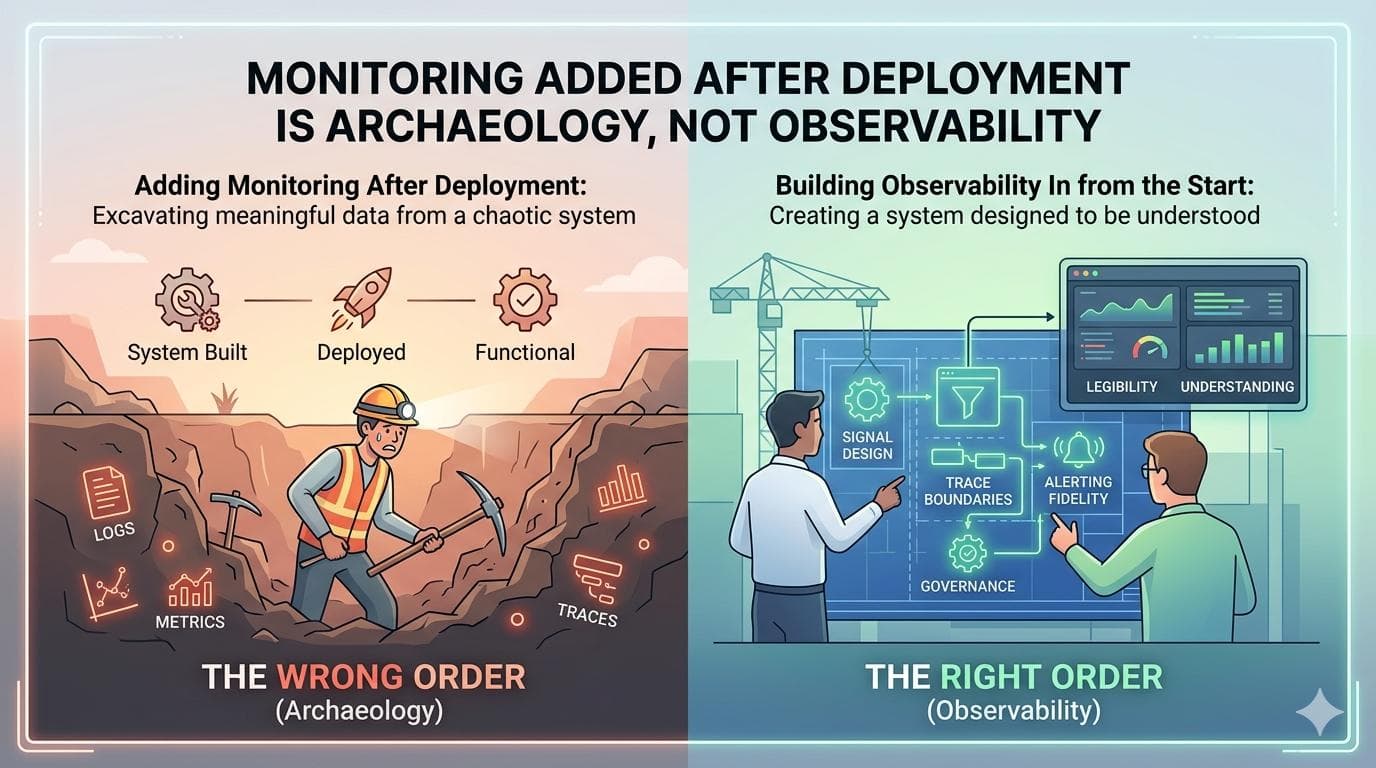
Monitoring Added After Deployment Is Not Observability. It Is Archaeology.

Observability is not a monitoring add-on. It is an architectural constraint. Systems built without observability baked in cannot be understood, cannot be governed, and cannot be improved. The OSAF model tells you exactly where your architecture is blind.

...Architecture Framework (OSAF) is a five-pillar model for embedding observability into architectural decisions — not as an afterthought, but as a first-class design constraint. Its purpose is direct: Make...

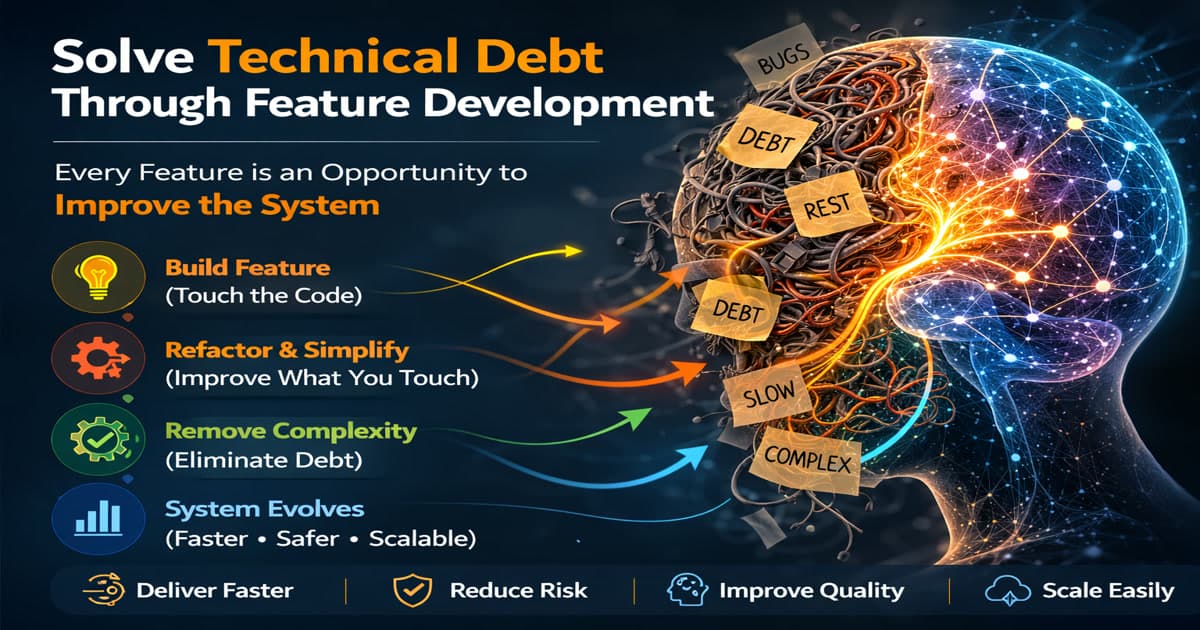
Solving Technical Debt Through Feature Development: Turning Product Delivery into Architecture Improvement

A practical framework explaining how organizations can systematically reduce technical debt while delivering new features, instead of running disruptive modernization programs.

...take priority. Refactoring is postponed. Months later: Systems become harder to change Development velocity slows Incident risk increases Engineers grow frustrated Eventually leadership proposes a...

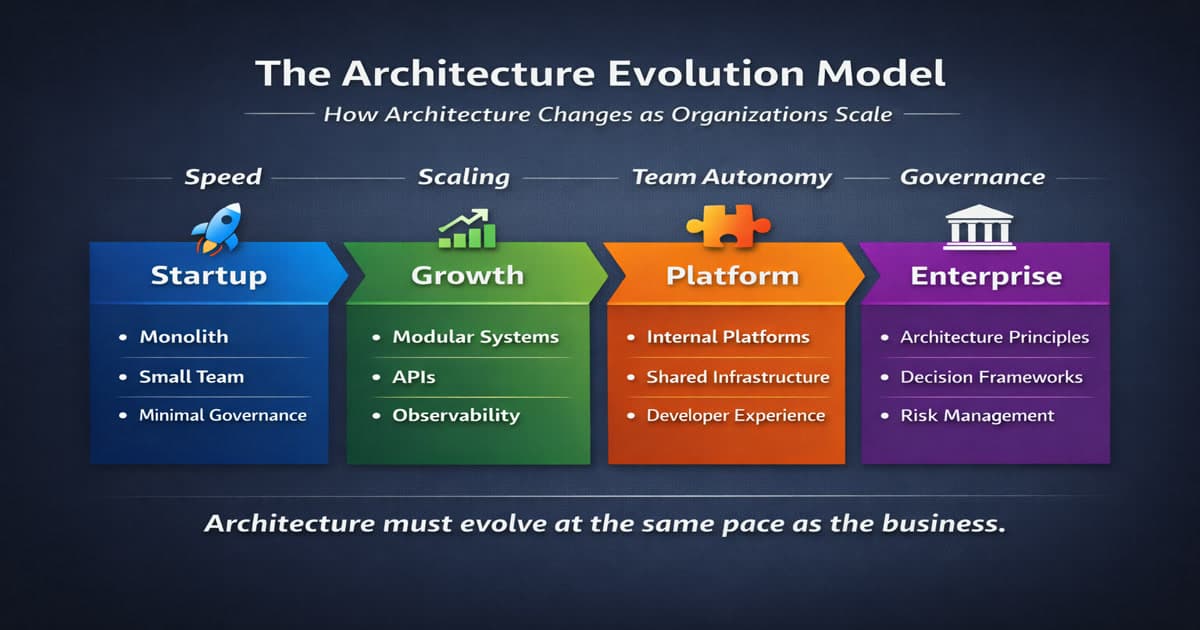
The Architecture Evolution Model: How Architecture Changes from Startup to Enterprise

A practical framework explaining how software architecture evolves from startup experimentation to enterprise-scale governance, and what architectural practices are needed at each stage.

...infrastructure Minimal governance Rapid experimentation Few architectural constraints Small engineering teams Decisions prioritize time-to-market over structural perfection. The goal is not architectural elegance. The...

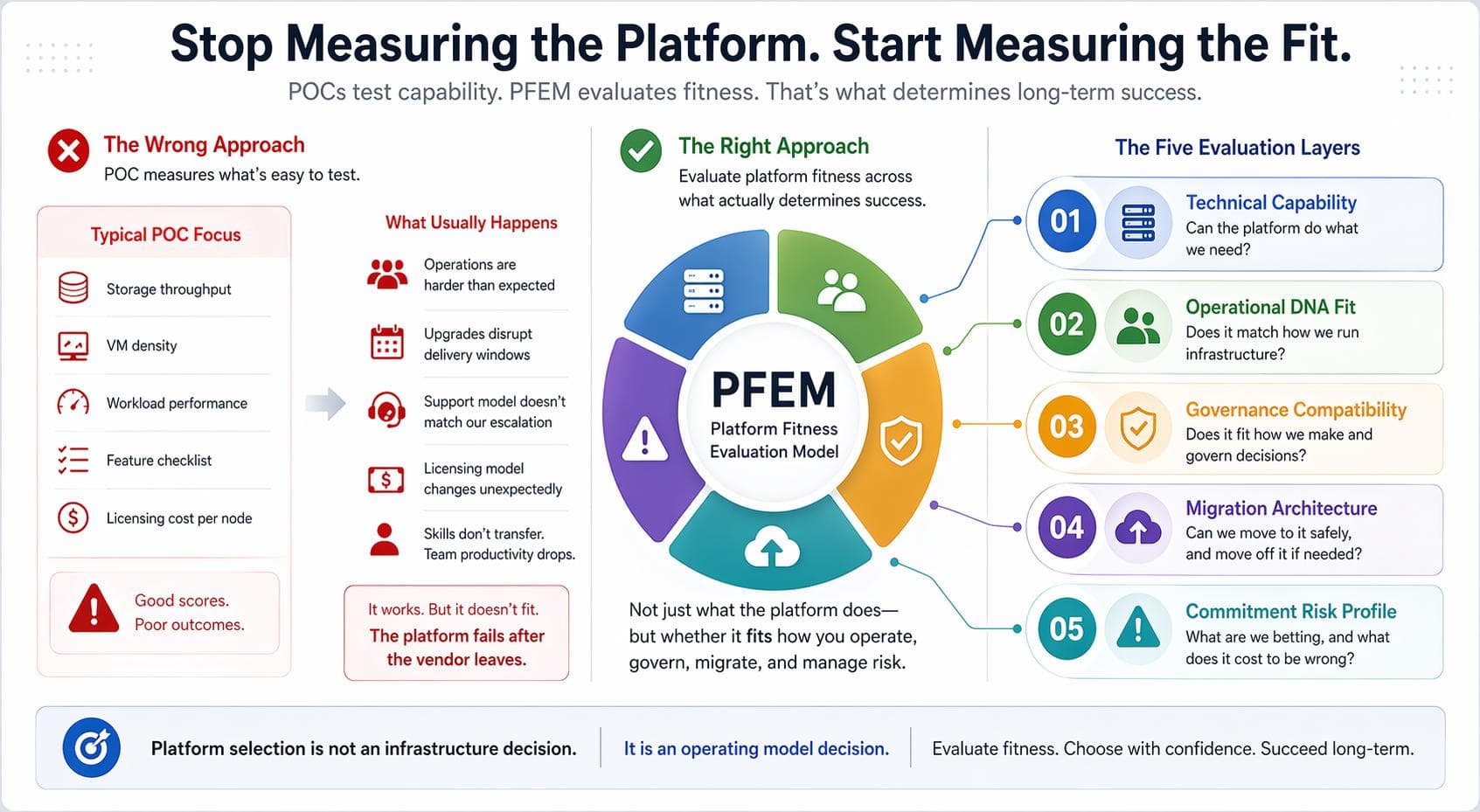
Your HCI Proof of Concept Measures the Wrong Thing.

Most organizations evaluate private cloud and HCI platforms by running a technical POC. The POC passes. The platform fails. The reason is structural — and fixable. The Platform Fitness Evaluation Model (PFEM) tells you what to measure instead.

Executive Summary Who this is for: CTOs, CIOs, Enterprise Architects, Infrastructure Leaders, IT Decision Makers Problem it solves: Organizations select private cloud and HCI platforms using technical...